The internet has made everyday life much easier. I can shop online, pay bills, communicate with people, manage accounts, and find information within minutes. However, with these benefits comes another problem that every internet user should take seriously: online scams.
Online scams are becoming more convincing. Scammers no longer rely only on obvious fake messages with poor spelling. Many scams now use professional looking websites, realistic emails, fake customer support accounts, and urgent messages designed to make people react without thinking.
In my opinion, the best way to stay safe online is not to become afraid of using the internet. Instead, we should learn how common online scams work and understand the warning signs. Once you know what scammers are trying to do, suspicious messages become much easier to recognize.
What Are Online Scams?
Online scams are fraudulent activities that use the internet, email, social media, websites, messaging applications, or digital payment services to trick people.
The main goal is usually to steal money, passwords, personal information, banking details, or access to online accounts.
Some scammers pretend to be banks. Others may pretend to be delivery companies, online stores, government organizations, friends, employers, or technical support agents.
The methods may look different, but most scams have something in common. They try to create trust, fear, excitement, or urgency so that you make a quick decision.
Understanding this is one of the most important online safety tips I can share.
Phishing Scams
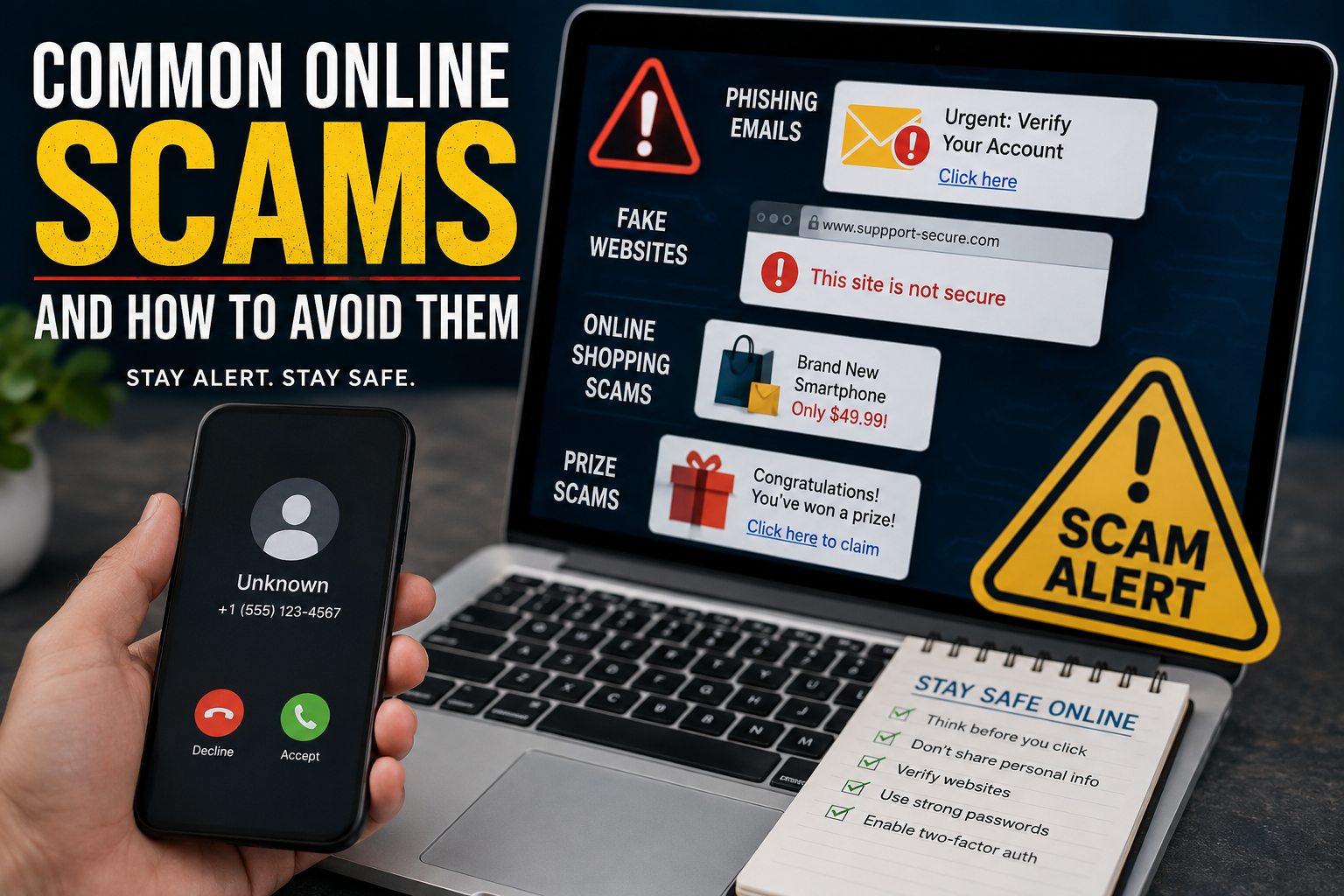
Phishing is one of the most common online scams.
A phishing scam usually arrives through email, text message, or social media. The message may claim that there is a problem with your account and ask you to click a link.
For example, you might receive a message saying that your bank account needs verification or that your email account will be locked unless you confirm your information.
The link may lead to a fake website that looks similar to the real website. If you enter your username, password, or banking information, the scammer may receive it.
To avoid phishing scams, I recommend avoiding links in unexpected messages. Instead, open the official website or application yourself and check whether there is actually a problem.
Fake Shopping Scams
Online shopping scams have become another major problem.
A fake online store may advertise expensive products at unbelievably low prices. You might see a phone, laptop, clothing item, or other popular product offered for a price that seems too good to be true.
Some fake stores are designed to collect payments without ever delivering the product. Others may collect personal and payment information.
Before buying something from an unfamiliar website, check the website address carefully. Look for independent reviews and research the company before making a payment.
I also avoid making purchases simply because a website creates artificial urgency with messages such as limited stock or a deal ending within minutes.
A genuine discount can exist, but pressure should not replace careful research.
Prize and Lottery Scams
Prize scams are designed to make people feel excited.
You may receive a message claiming that you have won a competition, lottery, gift card, smartphone, or large amount of money.
The problem is that you never entered the competition.
The scammer may then ask you to pay a small processing fee or provide personal information before receiving your supposed prize.
A simple rule can protect you here: if you did not enter a competition, be extremely suspicious of a message claiming that you won it.
Never send money simply to receive a prize you did not expect.
Tech Support Scams
Tech support scams often involve fake warnings about computer or smartphone problems.
You may see a pop up claiming that your device has been infected with a virus and that you need to call a support number immediately.
The person on the other end may pretend to be a technician and ask you to install remote access software or provide account information.
The scammer may then attempt to access your computer or convince you to pay for unnecessary services.
Real security warnings should be handled carefully. If you believe your device has a problem, use the official support website for your operating system, device manufacturer, or security software rather than calling a random number displayed in a pop up.
Social Media Scams
Social media platforms are also commonly used for scams.
Fake accounts may copy the name and profile picture of a real person. Scammers may then contact friends or followers and ask for money.
Other social media scams involve fake giveaways, investment opportunities, suspicious links, and fraudulent shopping pages.
One thing I always recommend is verifying the identity of anyone who suddenly asks for money or sensitive information.
If a friend sends an unusual message asking for financial help, contact that person through another method before sending anything.
Romance Scams
Romance scams target people through dating applications, social networks, and messaging platforms.
A scammer may build a relationship with someone over weeks or months before asking for money.
They might claim to have an emergency, medical problem, travel issue, or financial difficulty.
The emotional connection can make this type of scam particularly difficult to recognize.
A major warning sign is someone you have never met in person repeatedly asking for money or financial assistance.
I believe it is important to keep emotions and financial decisions separate. Never send money simply because someone has gained your trust online.
Fake Delivery Messages
Delivery scams are especially common because many people regularly order products online.
You might receive a text message claiming that your package could not be delivered and that you need to pay a small fee or update your address.
The message may contain a link to a fake website designed to collect your information.
Instead of clicking the link, open the delivery company’s official website or application and check the tracking information there.
A small unexpected payment request should always be treated carefully.
Investment Scams
Investment scams often promise unusually high returns with little or no risk.
You may see advertisements or receive messages promoting cryptocurrency, stocks, trading platforms, or other investments.
Some scammers even create fake investment dashboards that appear to show growing profits.
The victim may initially be encouraged to deposit a small amount. Later, the scammer may demand additional payments to withdraw the supposed profits.
There is no investment that can honestly guarantee huge returns without risk.
Before investing, research the company independently and never rely solely on information provided by someone who is trying to convince you to send money.
Job Scams
Job seekers can also become targets.
A scammer may post a fake job advertisement promising easy work and excellent pay. After contacting the applicant, they may request an upfront fee, personal information, banking details, or payment for equipment.
A genuine employer should not normally require you to pay money simply to get a job.
Research the company, verify its official website, and be careful with unexpected job offers received through messaging applications or social media.
If the salary seems unrealistic for extremely simple work, that is another reason to investigate carefully.
How to Avoid Online Scams
The best protection against online scams is a combination of awareness and good digital habits.
First, slow down when a message creates urgency. Scammers often want you to act before you have time to think.
Second, verify information independently. Do not use the phone number, email address, or website link provided in a suspicious message. Find the official contact information yourself.
Third, protect your passwords. Use strong and unique passwords for important accounts. A password manager can also make it easier to use different passwords without having to remember every one.
Fourth, enable two factor authentication whenever it is available. Even if someone discovers your password, an additional verification step can make unauthorized access more difficult.
Fifth, keep your phone, computer, browser, and applications updated. Security updates can help protect your devices from known vulnerabilities.
Never Share Sensitive Information Unnecessarily
Scammers may ask for passwords, verification codes, banking information, identity documents, or other personal details.
One important rule is that you should never share security codes simply because someone claims to be from your bank, email provider, or another organization.
If you receive a verification code that you did not request, do not give it to anyone.
I also recommend being careful about sharing personal information on social media. Information such as your birthday, address, phone number, workplace, or travel plans can sometimes be useful to scammers.
What To Do If You Suspect a Scam
If you think a message is a scam, do not click links or respond to the sender.
Take a screenshot if necessary and report the account or message through the relevant platform.
If you have already entered your password on a suspicious website, change that password immediately from the legitimate website. If you reused the same password elsewhere, change it on those accounts too.
If you have shared financial information or sent money, contact your bank or payment provider as soon as possible and explain what happened.
Acting quickly can sometimes reduce the damage.
Final Thoughts
Common online scams can affect anyone, regardless of their technical knowledge. The important thing is learning how scammers operate and recognizing suspicious behavior before taking action.
Phishing emails, fake shopping websites, prize scams, romance scams, fake delivery messages, investment scams, job scams, and technical support scams all use different approaches, but they often depend on the same psychological tricks: urgency, fear, excitement, trust, and confusion.
My biggest online safety tip is simple: slow down and verify.
If a message asks for money, passwords, security codes, or personal information, take a moment to check whether the request is genuine. Visit the official website yourself, contact the organization through a trusted method, and never allow pressure to make the decision for you.
With strong passwords, two factor authentication, regular software updates, careful browsing habits, and a healthy level of skepticism, you can greatly reduce your chances of becoming a victim of an online scam.
What would you like next: phishing scams, online shopping scams, or social media scams?